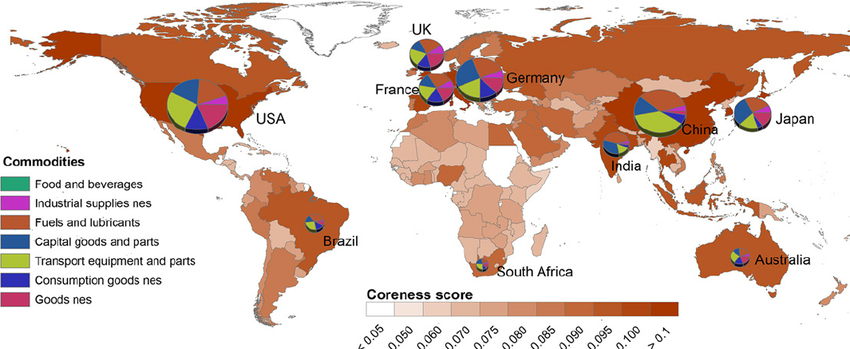
In a sobering update, the World Bank has made downward revisions to its global growth outlook for 2025, signalling that the world economy is facing significant headwinds. The institution now forecasts growth of approximately 2.3% for 2025—down from earlier estimates.
A primary factor behind this slowdown is the mounting pressure from elevated trade tensions. Countries around the globe are imposing higher tariffs, causing ripple effects across supply chains and investment flows. The Organisation for Economic Co‑operation and Development (OECD) also warns that barriers to trade, tighter financial conditions and declining business confidence are contributing to weaker growth prospects.
These developments arrive at a moment when global uncertainty remains elevated. From geopolitical conflicts to energy disruptions, the multiple shocks of recent years continue to reverberate through economies. Sectoral weakness in advanced economies is growing obvious, while emerging markets face the dual burdens of weaker external demand and tighter access to capital.
Despite this challenging backdrop, there are signs of resilience. Notably, the India economy continues to outperform: recent data show growth of about 7.4% in the January–March 2025 quarter, far outpacing many peers. Analysts say that while India’s strong domestic demand and structural drivers are contributing to its momentum, its progress also underscores the widening divergence between high-growth developing economies and sluggish advanced ones.
Looking ahead, policymakers face a delicate balancing act. To stabilize growth, efforts will need to focus on:
- reducing trade and policy uncertainties
- restoring confidence in investment
- strengthening financial buffers
- fostering sustainable productivity gains
Without meaningful action, the risk is that subdued growth becomes entrenched—and global living standards could suffer further. For now, the world economy has entered a period of transition: steady may not be enough.