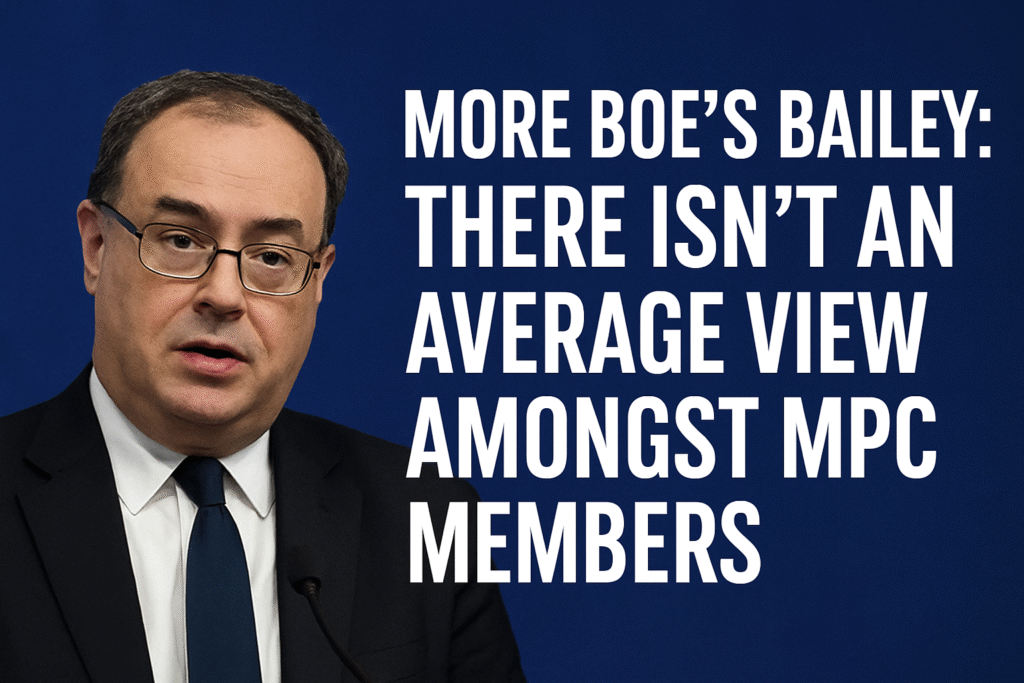
Bank of England Governor Andrew Bailey acknowledged on Monday that the Monetary Policy Committee (MPC) remains divided on the future direction of interest rates, reflecting the real uncertainty and debate within the central bank as policymakers grapple with the competing pressures of persistent inflation and a weakening economy.
Speaking at a financial forum in London, Bailey stressed that the MPC’s decisions are grounded in real-time data, and that members often see the same figures through different lenses. “There isn’t an average view amongst MPC members,” Bailey admitted, pointing out that recent changes in inflation, wage growth, and energy prices have genuinely left room for disagreement about the pace and timing of any shift in policy.
The BoE last month held its benchmark rate at 5.25%, marking the third consecutive meeting without a change. While inflation has eased from double-digit levels earlier in the year, it remains above the bank’s 2% target, leaving policymakers cautious about signaling a clear shift toward easing. Some MPC members have voiced concern that loosening policy too soon could risk reigniting price pressures, while others argue that high borrowing costs are already weighing heavily on households and businesses.
Bailey also highlighted the challenges of interpreting recent data in light of global volatility and domestic fiscal uncertainty. “We’re seeing a complex mix of signals,” he said, referring to stronger-than-expected consumer spending alongside softer manufacturing and housing figures.
Market reaction to Bailey’s comments was muted, with the pound holding steady near $1.28 against the U.S. dollar and U.K. gilt yields showing little change. Traders now anticipate the BoE could begin cutting rates around mid-2025, though much will depend on upcoming inflation and labor market data.
Economists say Bailey’s remarks reflect a cautious but realistic tone. “He’s signaling that debate within the MPC is wide open — and that future decisions will hinge on whether inflation continues to fall in line with expectations,” said one London-based economist.
As the U.K. economy faces sluggish growth and lingering inflation concerns, the BoE’s next policy move remains finely balanced. Bailey’s acknowledgment of differing opinions within the MPC suggests that consensus may remain elusive for some time.